Author: AJLancaster

  • National Novel Writing Month 2017: Permission to be terrible

    National Novel Writing Month 2017: Permission to be terrible

    Every November there is a big and very nerdy international event of significance only to writers: National Novel Writing Month. The basic idea is to write 50,000 words between 1-30 November. It’s supposed to encourage people to stop procrastinating / agonising over every word and just write. Your 50,000 words don’t have to be any good; they just have to exist.

    I find this very fNaNo-2017-Participant-Badgereeing. The thing about writing is that when you first start doing it you’re generally terrible. And the only way to not be terrible at it is to let yourself continue writing whilst you are terrible at it. This can be difficult if you’re anything like me. In another life, I worked as an editor, which made me intensely conscious of my own writing’s terribleness. Trying to learn to write while a critic sat on my shoulder and agonised over every adverb went about as well as you’d expect.
    NaNoWriMo taught me how to turn off my inner editor. Editing is great, but the writing has to come first. You can’t edit a blank page.

    I don’t always do NaNoWriMo, but this year the timing coincides nicely with my schedule, which has me finishing Book 4 in my Stariel Series before the end of the year (Optimism! Yay!). Right now I’m frantically trying to nail down some semblance of plot, ready to start writing on 1 November.

    Wish me luck!

  • How long is a book? Wordcounts for fantasy novels

    How long is a book? Wordcounts for fantasy novels

    How long is a book?

    This is a question I first asked the internet at around age 14, after finishing my then-masterwork of epic fantasy (spoiler: not actually a masterwork of epic fantasy).

    The internet answered: Um. It’s complicated.

    Now, keep in mind that the internet then was not the internet of now, when indie publishing has made this question (a) a lot more commonly asked and (b) a lot more commonly answered. Note that I didn’t say I googled the question, because I’m not sure I was actually using Google back then. (My introduction to Google came from one of my classmates at around this same age:
    “Hey, there’s this really great search engine you should check out called Google.com”
    Me: “How do you spell that?”)

    So today, if you ask the internet how long a book is, it will tell you: Um. It’s complicated. That’s because there isn’t actually a standard length for books. Exhibit A:

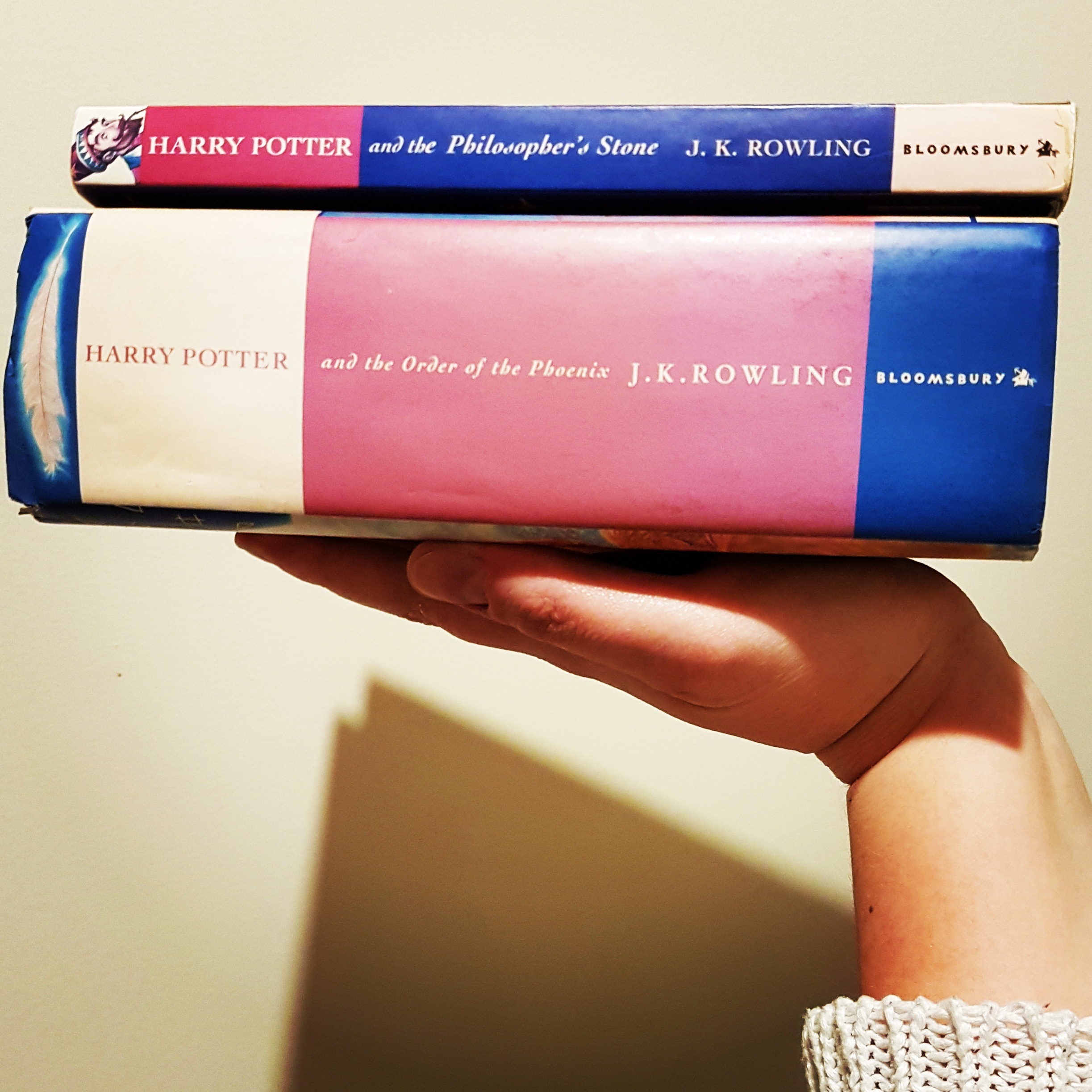
    Big book and lil book
    Harry Potter and the Philosopher’s Stone (77,325) and Harry Potter and the Order of the Phoenix (257,154).

    In terms of novels – adult novels – around 40,000 words is where the starting point gets drawn. The 70,000-100,000 word range is standard for most genres except epic fantasy, which tends to be 100,000 words minimum, and some subgenres of romance that tend to run shorter.

    I looked up wordcounts of a random assortment of books I like, and you can see how much they vary.

    Book Wordcount
    Harry Potter and the Philosopher’s Stone by J.K. Rowling 77,325
    Faro’s Daughter by Georgette Heyer 88,743
    Storm Front by Jim Butcher 86,961
    Mort by Terry Pratchett 94,240
    The Hobbit by J.R.R Tolkien 95,022
    Pride and Prejudice by Jane Austen 120, 697
    Uprooted by Naomi Novik 143,840
    Twilight by Stephenie Meyer 168,640
    A Game of Thrones by George R. Martin 298,000
    The Way of Kings by Brandon Sanderson* 387,000

    Does word count matter? For print books, yes. The longer the book, the more it costs to print. There’s only so big you can physically make a paperback before it ceases to function as a book and becomes merely a blunt instrument. Hardbacks are more robust and can contain more words before they break under the strain, but they’re also more expensive to print than paperbacks. This is why the world has  given us Brandon Sanderson’s The Way of Kings in two volumes. See also: George R. Martin (did I mention the 100k general starting point for epic fantasy?)

    Does word count matter for ebooks? A smidgeon** maybe, but mostly no.

    How long are my books? Well, they’re not yet finished so this is a preliminary wordcount:

    The Lord of Stariel: 82k
    The Prince of Secrets: 96k
    The Court of Mortals: 110k
    Book 4 Currently Nameless: 0, since I haven’t started writing yet. But otherwise, there seems to be a trend here…


    *pretty sure Brandon Sanderson is an alien / robot / magic and as such is an outlier that should not be counted.

    **From a dollar perspective, Amazon charges to deliver ebook files based on their size. Amazon.com charges US $0.15/MB, but since file size is way more affected by the number of images than the number of words, it’s not really an issue of ebook length per se.

  • My Writing Process

    My Writing Process

    A few people have asked why they can’t read Book 1: The Lord of Stariel now if I’ve finished writing it. (As an aside, this enthusiasm is awesome. Thanks guys!) The answer is mostly because I’m writing a quartet and at the end of Book 4 it needs to look like I knew where I was heading all the way back in Book 1. This can be achieved in two ways:

    (1) Knowing where I was heading all the way back in Book 1.

    (2) By returning to Books 1, 2, and 3 after I’ve arrived at the end of Book 4 and changing things to make it look like I 100% planned it this way the whole time. Obviously the overarching plot isn’t still a big foggy mystery to me in any way. Nope. Definitely not. IGNORE THIS ENTIRE PARAGRAPH.

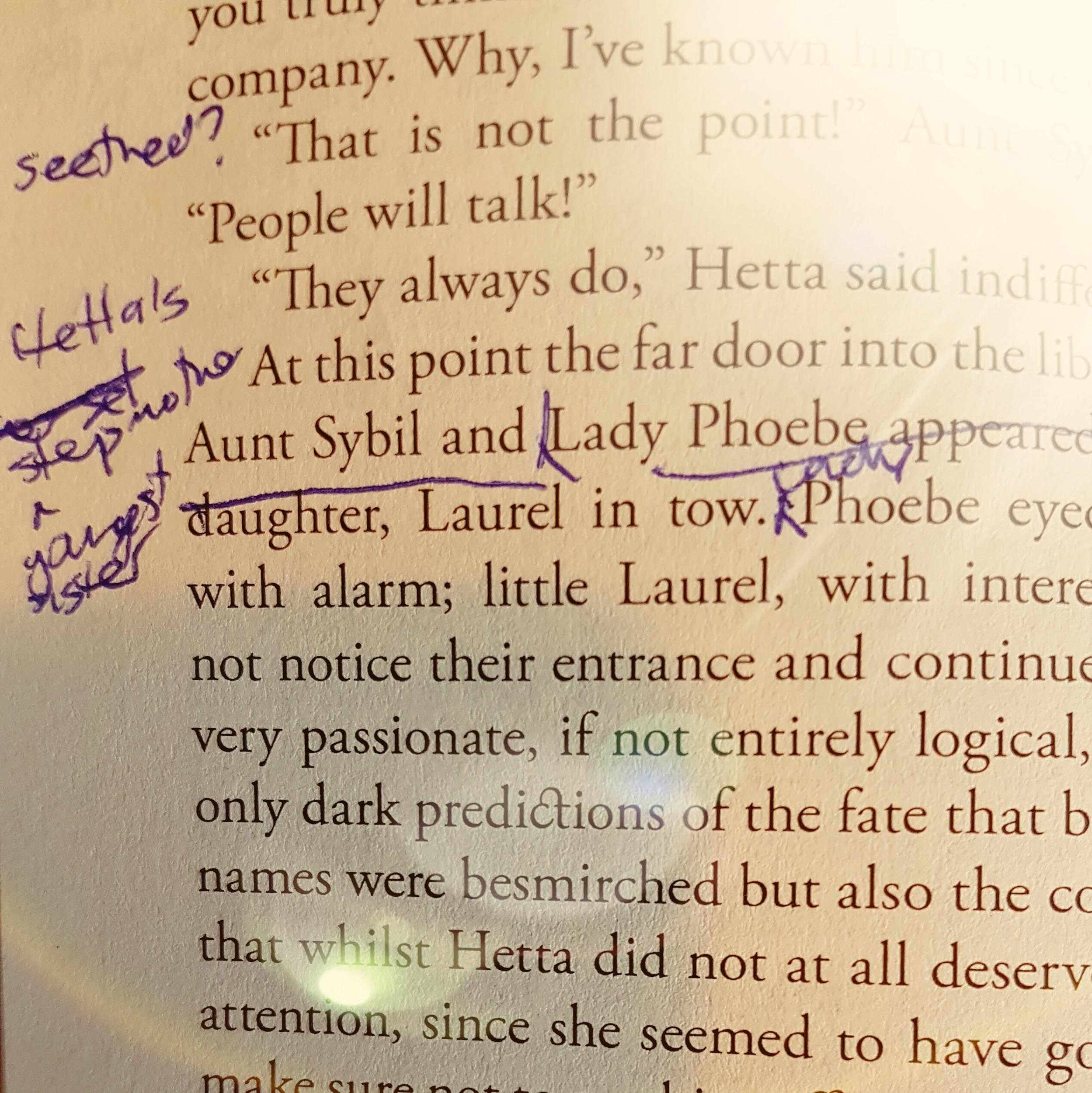
    editing_extract_LoS
    Revision notes on one of my early drafts

    There’s another reason why finishing-a-draft ≠ book-being-immediately-available-to-read, and that’s the writing/publishing process. The writing process (for me) looks like this:

    1. Planning: Yes. Ahem. Moving on.
    2. The First Half of the Book: Shiny idea! I’m a genius! Look at all those words!
    3. The Mid-Point of the Book: Oh dear. Where was I going again?
    4. The End of Draft Zero: Whew, I finally figured out how it ends.
    5. The First Edit: Quick, revise the earlier bits of the book so they match the ending!
    6. First Draft Complete: The manuscript and I spend some time apart. A small number of trusted beta readers* read the book.
    7. Revision: I look at the book with fresh eyes + beta reader feedback and make giant lists of things to fix. I fix the things.
    8. Final Draft: OK, there’s generally a few drafts between Draft One and Final Draft, but let’s pretend in this hypothetical novel I fixed all the things in one round of revisions. Woo! Go me!
    9. And now onto the next step in the publishing process… (more on this in a different update)


  • Writing in Cafes Review: The Annexe, Whitcoulls aka The Cafe of Awkward Bathroom Escorts

    Writing in Cafes Review: The Annexe, Whitcoulls aka The Cafe of Awkward Bathroom Escorts

    Cafes and bookshops are two of my favourite things, so cafes IN bookshops = happy me. In central Wellington, this combo exists only in The Annexe, which is the cafe on the second floor of the Whitcoulls bookshop on Lambton Quay. I hang out here a lot on weekends, because of the following paragraph of reasons (and despite the anti-reasons in the rest of this post):

    Reasons to go there

    This is a large, airy cafe with a cosy atmosphere (I mean, it’s in a bookstore!) and a sweet people-watching view of Lambton Quay, the main shopping street in Wellington. It’s never so busy that I feel guilty for laying claim to a table for hours at a time. There’s free WiFi, but only half an hour of it (maybe this is their way of encouraging you to leave after that amount of time, but I actually find it helpful in terms of preventing me from procrastinating by reading the internet instead of writing). The food for purchase is entirely edible.

    Small laptop on a cafe table with a view of The Annexe

    Reasons not to go there

    The greatest downside to this cafe isn’t that you might accidentally purchase books on your way out despite the fact that you swore you were cutting down on spending and promised yourself that this would be a coffee-ONLY trip even if the new house editions of the Harry Potter books are super neat and right THERE on the shelf where you could buy them but you DEFINITELY DON’T NEED THEM YOU ALREADY OWN COPIES OF ALL THE HARRY POTTER BOOKS. Ahem.

    Harry Potter house editions displayed on a shelf in a bookstore

    The greatest downside isn’t even the fact that the coffee is pretty dreadful. No, by far the worst thing about The Annexe is the bathroom situation. The bathroom is locked, and you have to go up and ask the staff if you want to use it. They won’t give you the code for the bathroom door (or even *gasp* have an unlocked bathroom). That would be way too sensible. No, they escort you there and let you in personally. Since the bathroom is located on the other side of the floor, through the bookshop, this means having to make awkward so-how’s-your-day-going conversation whilst trying not to feel like a small child being taken for a bathroom break.

    For my list of optimum cafe writing conditions, see here.

  • Optimum Cafe Conditions for Writing

    Optimum Cafe Conditions for Writing

    I spend a surprising amount of time writing in cafes. I like the background white noise, the free heating/air-conditioning (depending on season), and the ability to be alone whilst not alone. The easy access to hot drinks is a nice bonus.

    My working relationship with cafes isn’t a new thing. When I was a university student, I used to study in cafes in the breaks between lectures, spreading my flash-cards and notes out to cover an entire table and making one hot chocolate last for several hours. During my overseas experience in the United Kingdom, I outlined The Lord of Stariel in the Starbucks in Tooting Broadway, London, and wrote the first draft in various cafes around Oxford.

    Consequently, I have a lot of Opinions about what makes for a productive cafe experience. My list of requirements, in order of priority, are:

    1. Large enough that you don’t feel guilty hogging a table for hours (and also so it’s not just you and the barista awkwardly hanging out together)
    2. Good table size & comfortable seat height
    3. No loud music or children
    4. Warm (I get cold easily)
    5. Long opening hours
    6. WiFi
    7. Good coffee
    8. Cheap and diverse cabinet food

    Coming soon on the blog: reviews of Wellington cafes from a writing perspective.

    IMG_20170806_171558_410
    This is from Ombra, Cuba St, which I would never try to write in as it’s more restaurant than cafe, but they do mochas with a SOLID STICK OF CHOCOLATE to swirl around and melt!!!! You’re welcome.
  • Genre: What even is ‘gaslamp fantasy?’

    Genre: What even is ‘gaslamp fantasy?’

    When I finished the first draft of The Lord of Stariel, my friends and family asked, not unnaturally, what it was about.

    “Well,” I said. “It’s a fantasy novel.”

    This was and remains 100% true. It is a fantasy novel. There is magic. Excellent – genre nailed down.

    However, fantasy is a giant genre, so I tried to be a little more specific. The attempt to pin down my subgenre quickly became a depressing exercise in things my novel lacks. It isn’t medieval, grimdark, epic, urban, or steampunk. It’s historicalish but it’s set in its own world. It isn’t about sword fights or going on a quest. There are fae, but it isn’t a fairytale retelling.

    For a while I called it ‘fantasy romance’ because those are two things it definitely contains – even though the romance isn’t exactly the main plotline.

    Eventually I did find a weird niche subgenre label for it in addition to fantasy romance: gaslamp fantasy. This is a subgenre that (a) most people have never heard of and (b) is basically defined entirely by what it’s not. Hoorah!

    Wikipedia defines gaslamp fantasy as:

    ‘a subgenre of both fantasy and historical fiction. Generally speaking, this particular realm of fantasy employs either a Victorian or Edwardian setting. The gaslamp fantasy genre is not to be confused with steampunk…’

    The way I see it, gaslamp fantasy is the magical cousin of steampunk. Steampunk I think draws more from science fiction than fantasy, and has a big focus on machines, cogs, corsets, goggles, Victorian-aesthetic, and, er, steam. Gaslamp is less about the technology and more about fantastical elements in a late nineteenth/early twentieth century setting.

    Today I found out that Amazon recently created a category for gaslamp fantasy books, which heartened me until I glanced through the books listed and found that most of them appeared to be steampunk. Oh well. It’s only a little baby subgenre at the moment – maybe it will grow into something big and popular! After all, a few decades ago most people had never heard of urban fantasy either.

    Bring on the gaslamp fantasy revolution!

  • Does Size Matter? Choosing the Right Book Format

    Does Size Matter? Choosing the Right Book Format

    This weekend I’m trying to choose the optimum book size. Specifically, fantasy novel size. This isn’t an abstract decision—what I pick will be the size I ask my designer to do for my covers. This is going to be a dorky technical post consisting of me working through my logic on the subject, so forgive me. More scintillating posts to follow, I promise.

    Obviously, e-book covers don’t have a size so much as a ratio of width: height. I don’t think anyone particularly notices or cares whether the ratio is 1:1.6 or 1:1.5 or 1:1.45 so long as it’s, y’know, a rectangly bookish ratio and not a square.

    comparison of cover ratios
    A selection of sort-of-the-same-genre-as-mine ebook covers. Difference in width:height ratio = no one notices or cares!

    So this is a decision where I think print preferences can rule and dictate the corresponding ebook cover size.

    There are two big print-on-demand outfits for indies: Createspace and IngramSpark. The print-on-demand bit is important, because it means I don’t have to pay for warehousing or minimum print run costs; these guys print-and-ship individual copies as they are ordered and charge me on a per-copy basis. IngramSpark offers more formats and wider distribution options, but Createspace is cheaper and easier to set up. Long-term, I think I may use both, but to start with I intend to go through Createspace.

    Because I’m not a heathen, my novels will be printed on cream paper rather than white. Createspace offers expanded distribution, but only for some formats (especially in cream paper). Expanded distribution means they will distribute a book to places other than Amazon.com. Given the constraints (cream paper, expanded distribution, available on both Createspace and IngramSpark), my choices become instantly quite limited:

    • 5” x 8” (127 x 203 mm)
    • 5.25” x 8” (133 x 203 mm)
    • 5.5” x 8.5” (139.7 x 215.9 mm)
    • 6” x 9” (152 x 228.6 mm)

    All of these sizes are…odd, from a New Zealand reader’s perspective. They’re just slightly off the common sizes we get here, which are the same as the UK:

    • A format “mass market paperbacks” (110mm x 178mm)
    • B format (129mm x 198mm)
    • C format “trade paperbacks” (135mm x 216mm)
    img_20170526_142612_685.jpg
    A, B, and C format books from my shelf.

    Presumably the odd USA sizes are actually common book sizes over there and not just randomly made up to be difficult, but I’m struggling to find any examples in my bookshelf in any of the standard Createspace formats. However, they’re not that different from A, B, and C format books, so I’m using those as a basis.

    Step 1. Immediately remove 6” x 9” as a choice because that just seems unnecessarily enormous. I’m not writing Game of Thrones; I don’t need all the extra page space I can get. Also I don’t even own any books that big.

    I think 5.5” x 8.5” (139.7 x 215.9 mm) is my best option.  It’s a decent size without feeling monstrous, and it’s almost trade paperback size (135mm x 216mm) but about half a centimetre wider. It also has a width:height ratio that’s comfortably in the middle of the examples I put above ( 1:1.55). I think I can live with this.

    OK, decision made. Almost-but-not-quite C format paperbacks, here we come!

  • Camp Nanowrimo

    Camp Nanowrimo

    had intended to finish the raw draft of Book 3 of The Iron Law before 31 March, all nice and neat and ready to start editing the entire trilogy* for Camp Nanowrimo on 1 April. As it turns out, I’m not quite done with Book 3, so Camp has become a combo of finish-book-3 and editing.

    *trilogy…yes…definitely not looking like a fourth one will be in the works. Um.

  • The Cursed Child

    The Cursed Child

    It seems strangely appropriate to open my new blog with my thoughts on Harry Potter and the Cursed Child. After all, what other book series has spanned so much of my life and had such a profound effect on me?

    *considers this for a moment*

    OK, so there are others, but Harry Potter is definitely one of them. And there are few other series that fill me with such profound happiness. I think it’s to do with loving the books so intensely as a child; there is something different about the way one loves things when one is eleven versus when one is…er…no longer eleven.

    The cover of Harry Potter and the Philosopher's Stone showing a younger Dumbledore.
    My copy of Philosopher’s Stone, complete with strange pin-striped trouser man on the back. The internet has informed me that this is supposed to be Dumbledore. No, it’s not a first edition. Alas!

    As an eleven year old reading Harry Potter and the Philosopher’s Stone , there was nothing I (and probably most of my fellows) wanted more in the world than a letter from Hogwarts.

    As an adult I still wouldn’t say no to the letter, although I do have a few health and safety questions first…

    I approached Cursed Child with lowered expectations, of course. It wasn’t going to be a novel, no matter how much I might want it to be. It wasn’t going to rewrite the epilogue to Deathly Hallows, no matter how much I might want that too. I was determined to view it as only quasi-canon, an entirely separate beast from the rest of the series. I told myself not to get too excited.

    And yet…

    Harry Potter and the Cursed Child. And coffee. With marshmallows. For luck.
    Harry Potter and the Cursed Child. And coffee. With marshmallows. For luck.

    I don’t know if you, Gentle Reader, were there for the last few releases of the later Harry Potter books. I don’t know if you remember the frenzy of speculation, gnawing over theories for years between instalments. I don’t know if you counted down the days to release dates, if you hugged your copy close and then sequestered yourself in your bedroom and shouted at anyone who came in for the next 24 hours. I don’t know if you read until the words blurred and your head ached and you still couldn’t stop because you desperately needed to know what happened next.

    I may or may not have done all of the above. Particularly the shouting.

    As I stared down at my newly purchased copy of Cursed Child, all that came back to me, everything I was then and have become in the years since, everything these books meant to me, bitter and joyful all at once.

    I can be a tad melodramatic sometimes.

    I ordered coffee and stared at my new book some more. I opened the first page.

    Act One Scene One
    Act One Scene One

    I closed the first page.

    Harry is thirty-seven, I thought with a shock. It had been a long time since Harry was older than me.

    I took off the dust-cover and admired the gold-stamp on the case.

    Gold-stamped cover of Harry Potter and the Cursed Child. What it looks like nekkid, in effect.
    Gold-stamped cover of Harry Potter and the Cursed Child. What it looks like nekkid, in effect.

    I put the dust cover back on. I drank the coffee. I carefully re-wrapped the book in its brown paper bag. I walked home.

    I took the book out again.

    And then, Gentle Reader, I read it.

    It actually only took me a couple of hours to do so. Playscripts have much less words to them than books of equivalent size. The marathon I had psyched myself up for turned out to be more of a Sunday morning stroll.

    So what did I think?

    Spoilers from here on out, Gentle Readers!

    Well, firstly: I need to squee:

    Albus Severus Potter is in Slytherin!!!!!!!!!

    I have hoped for this to be the case for so long that this single fact makes me inclined to forgive Cursed Child literally anything and everything else.

    Second squee:

    Scorpius Malfoy and Albus Potter are besties!!!!!!!!!

    This makes me so happy. You have no idea how happy.  SO MUCH HAPPY.

    I have always felt Slytherin never really got shown as anything other than evil at worst and mildly bad at best. It is so satisfying to see Slytherin heroes!

    And did I mention that Scorpius and Albus are best friends and that they are the most adorable pair of besties that ever bestie-ed?

    Whew, okay, glad we got that out of the way.

    Secondly: boy is it weird reading a playscript where you get told what people’s feelings are rather than being shown them. To take a random example:

    PROFESSOR McGONAGALL is full of unhappiness, HARRY is full of purpose, GINNY is not sure what she’s supposed to be —Act Two, Scene Ten

    You lose a lot of nuance, which I imagine is added back in when you see it on stage with live actors.

    Please please let them film one of the shows so those of us not in London can see it!

    Thirdly: this play is so unbelievably fanfiction-y it’s surreal. I say that as someone who has a deep and abiding love for fanfiction. For those who don’t, what I mean by it being “fanfiction-y” is that it uses some of the more ridiculous devices you often see fanfiction writers use when they just want to have fun / are being a bit over the top. Like, let’s see:

    • Voldemort’s Secret Love Child!
    • Who Can Fly!
    • Is Going To Use Time Travel to Change The Past!
    • Unless She’s Stopped By Our Slytherin Heroes!

    That’s basically the plot. I’m being serious here. The plot genuinely involves Voldemort’s secret love child and time travel.

    Would I have preferred a different plot that didn’t re-hash events from the original series? Absolutely.

    Would I have liked to see more of Albus and Scorpius at school and less of them jumping back and forth in time? Obviously, yes.

    Did it really add much to our existing knowledge of Harry Potter? No, not really.

    Did I have trouble grappling with these suddenly older characters, not quite the same ones I knew and loved? Yes, and it pained me.

    But did I still enjoy the hell out of it? Yes, yes I did.

    And do I intend to re-read all seven original Harry Potter books asap? You betcha.