Category: writing

  • Greetings 2018! Writerly New Year’s Resolutions

    Greetings 2018! Writerly New Year’s Resolutions

    So here we are, 2018, Day One, all fresh and shiny and full of potential. Rather like a new notebook (and who doesn’t love the crisp perfection of new notebooks?).

    In the Northern Hemisphere, New Year has a sort of starting afresh / emerging from the darkest hour seasonal parallel. Here in New Zealand, we’re in the middle of summer, so it’s more a sense of emerging from a time of respite (the summer holidays), ready to face the world again. Once more unto the breach!

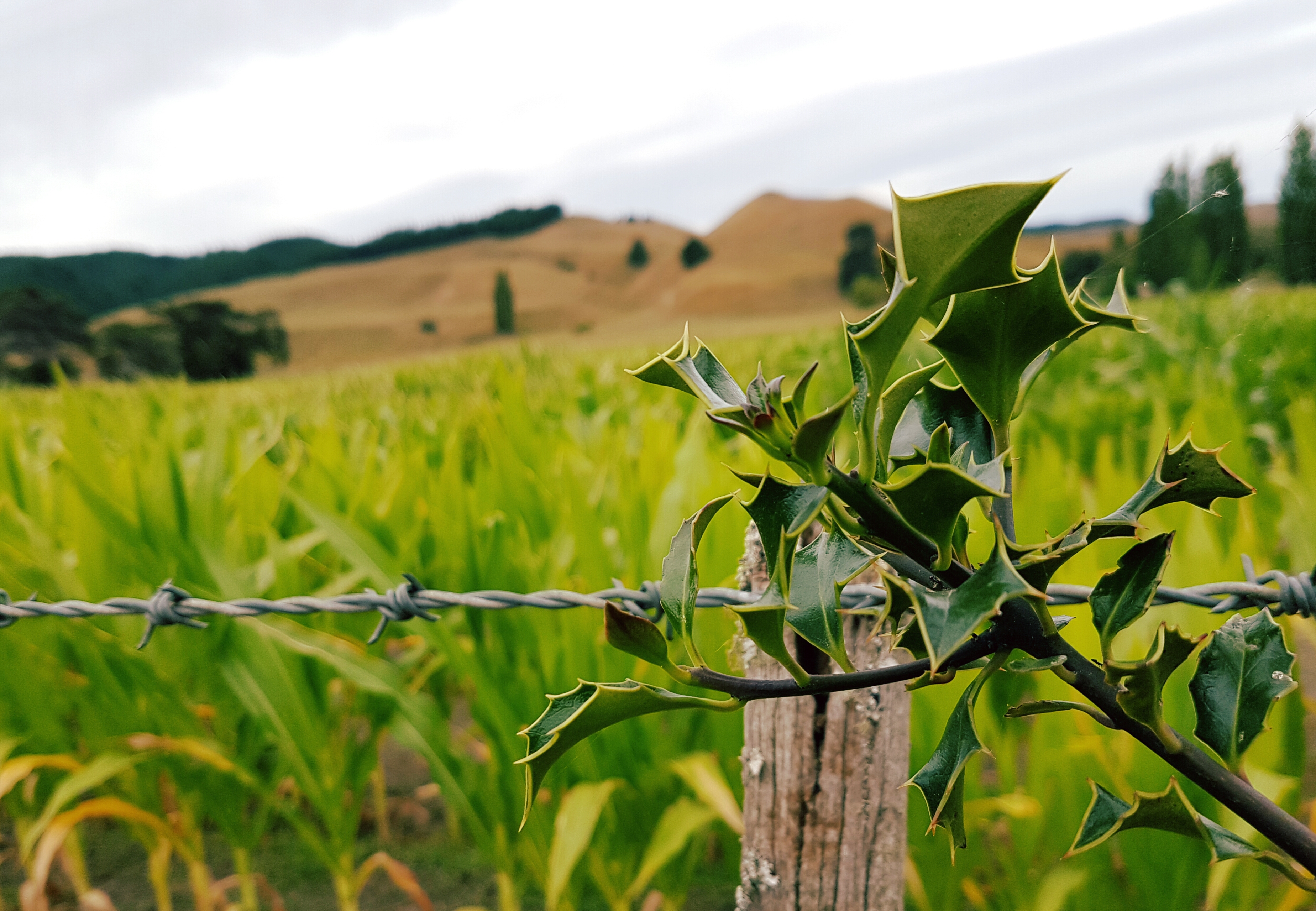
    Holly tree growing by the roadside
    I did find what I’m pretty sure is a holly tree growing along the roadside, which is kind of seasonally appropriate?

    What am I going to do with you, 2018? Well, 2017 has been a year of preparation, like a seed germinating beneath the earth. I wrote (and re-wrote) a lot of words in 2017; enough that I’m about half a book away from having my whole Stariel Series written. I intend for 2018 to be a year of spreading leaves aka publishing some books. I’m excited and terrified at the prospect. There’s a lot of work still to be done (not least of which is finishing the remaining half of Book 4): editing, covers, formatting, marketing and so on.

    It’s tempting to announce grandiose goals. On Day One, practically anything seems achievable by the end of the year. It’s also tempting to set goals based on what I see other writers doing. I will write twenty books! I will scale mountains and defeat ogres, armed only with weaponry constructed from hardbacks!

    But the truth is that writing is a very personal business. My goals have to align with my own values and my own reasons for doing this gig.

    So what do I value? I’ve done a lot of thinking, during these sleepy midsummer days, and what I want to achieve are books I enjoy reading and that I’m proud to put out into the world. It’s why I write, really – I want to finish writing any given book so I can have the pleasure of reading it once it’s written and polished and good enough*! This sounds a tad egotistical, when I put it like that, but one is supposed to be honest in New Year’s Resolutions, isn’t one?

    One should probably stop referring to oneself in the third person and get to the point.
    My goals for the year are thus, then:

    • Publish the Stariel books this year, but don’t sacrifice quality in the name of speed.
    • Read more books that aren’t regency romance novels this year, because it’s clearly starting to result in the use of too many third-person singular pronouns.

    *Deciding what constitutes “good enough” is, of course, as long as a piece of string.**
    **This is a malaphor, a blending of idioms. Aren’t malaphors just the bee’s pajamas?

  • The F word: Faerie, Fairy, Faery, Fayrie?

    The F word: Faerie, Fairy, Faery, Fayrie?

    I’ve been thinking a lot about a certain F word lately. You know the one:
    Fairy
    Faerie
    Faery
    Fae
    Fey
    Feyrie
    That one. Or rather, those ones. You see, my current series contains a lot of, um, F-things. And I need to decide which spelling to use.

    Now, you might think, given that I’m halfway through writing the fourth and final book in this series, that this decision would long since have been made. Ah, my sweet summer child. I am nothing if not indecisive. Besides, Microsoft Word has a global find-and-replace function, and I haven’t yet published any of the books. This means I’m not committed to any one spelling quite yet.

    However, I am going to have to become committed to a specific spelling shortly, mainly because the F-word looks like it’s going to appear in the title of Book 4. Which means it goes on the cover. Which means I need to nail down my spelling preferences before I organise the cover.

    So what’s the difference between all these words? To be honest, I’ve seen them all used interchangeably in fiction. Wikipedia has much the same attitude:

    Wikipedia_fairy_definition

    And Wikipedia doesn’t even mention the eleventy billion other options. Despite the consensus being, basically, “do what you want”, there are some differences in tone to consider. “Fairy” is more modern and evokes dainty tinkerbells; faerie has an archaic ring. Faery is an interesting mish-mash between the two. Fayrie belongs, I think, in the same category as vampyre and magyck aka who doesn’t love extra y’s in the middle of words? Phaeree? Now it’s just getting silly.

    Random selection of fairy titles
    A relatively random selection of book covers; consensus on spelling seems to be You Do You.

    I admit I’ve a fondness for “fairy” because mine are definitely not of the tinkerbell-sort, and the dissonance amuses me. But I also enjoy the eldritch connotations of “faerie” and aesthetically I quite like the appearance of “a” and “e” sitting next to each other (I shouldn’t have mocked the vampyres in the last paragraph – I have no high ground here at all, do I?).

    In the world of Stariel, I make a distinction between the Faerie Realm and the people who live in it – the fae. However, I haven’t quite been able to let go of the “fairy” spelling entirely – this is what uneducated humans call the fae. Is three different spellings in one novel being greedy?

    That said, enjoy an excerpt from the current draft of Book 1: The Lord of Stariel with all three spellings!

    “Am I to take it that my family are, in fact, fairies?” Hetta asked, pained.

    He burst into startled laughter. The sound filled the small room, warm and touchable, and Hetta gave her heart stern instructions not to soften in response. Remember how he’s lied to you!

    “Don’t you dare laugh! This entire tale is so fantastical that I wouldn’t believe a word of it if I hadn’t seen her change with my own eyes. How am I supposed to know what’s a reasonable question to ask? I’ve only known fairies are real for half an hour!”

    He wiped at his eyes. “Oh, I am sorry, Hetta. It wasn’t really so unreasonable a suggestion. It was your tone. You’re taking this much better than I’d hoped, despite my addle-brained telling of it.”

    “Well, get on with your addle-brained telling then.” Hetta eyed the whisky glasses on her desk, untouched from earlier. No, better not, she decided with regret. A clear head was required for this.

    He sobered. “To answer your question: no, the Valstars are not ‘fairies’. Or at least, not anymore. And I should correct your usage of terms. We are the fae; our land is Faerie.”

  • National Novel Writing Month 2017: Permission to be terrible

    National Novel Writing Month 2017: Permission to be terrible

    Every November there is a big and very nerdy international event of significance only to writers: National Novel Writing Month. The basic idea is to write 50,000 words between 1-30 November. It’s supposed to encourage people to stop procrastinating / agonising over every word and just write. Your 50,000 words don’t have to be any good; they just have to exist.

    I find this very fNaNo-2017-Participant-Badgereeing. The thing about writing is that when you first start doing it you’re generally terrible. And the only way to not be terrible at it is to let yourself continue writing whilst you are terrible at it. This can be difficult if you’re anything like me. In another life, I worked as an editor, which made me intensely conscious of my own writing’s terribleness. Trying to learn to write while a critic sat on my shoulder and agonised over every adverb went about as well as you’d expect.
    NaNoWriMo taught me how to turn off my inner editor. Editing is great, but the writing has to come first. You can’t edit a blank page.

    I don’t always do NaNoWriMo, but this year the timing coincides nicely with my schedule, which has me finishing Book 4 in my Stariel Series before the end of the year (Optimism! Yay!). Right now I’m frantically trying to nail down some semblance of plot, ready to start writing on 1 November.

    Wish me luck!

  • How long is a book? Wordcounts for fantasy novels

    How long is a book? Wordcounts for fantasy novels

    How long is a book?

    This is a question I first asked the internet at around age 14, after finishing my then-masterwork of epic fantasy (spoiler: not actually a masterwork of epic fantasy).

    The internet answered: Um. It’s complicated.

    Now, keep in mind that the internet then was not the internet of now, when indie publishing has made this question (a) a lot more commonly asked and (b) a lot more commonly answered. Note that I didn’t say I googled the question, because I’m not sure I was actually using Google back then. (My introduction to Google came from one of my classmates at around this same age:
    “Hey, there’s this really great search engine you should check out called Google.com”
    Me: “How do you spell that?”)

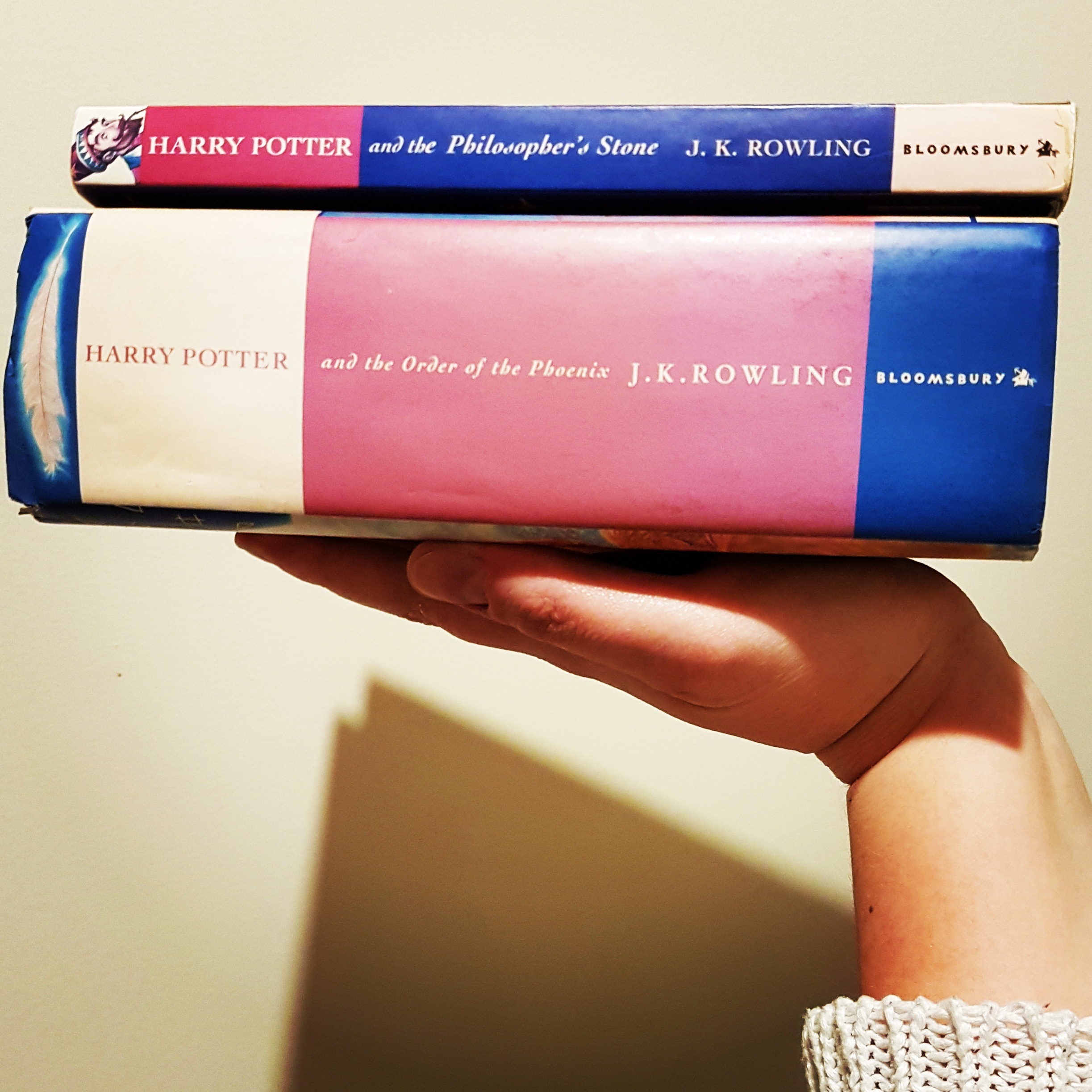
    So today, if you ask the internet how long a book is, it will tell you: Um. It’s complicated. That’s because there isn’t actually a standard length for books. Exhibit A:

    Big book and lil book
    Harry Potter and the Philosopher’s Stone (77,325) and Harry Potter and the Order of the Phoenix (257,154).

    In terms of novels – adult novels – around 40,000 words is where the starting point gets drawn. The 70,000-100,000 word range is standard for most genres except epic fantasy, which tends to be 100,000 words minimum, and some subgenres of romance that tend to run shorter.

    I looked up wordcounts of a random assortment of books I like, and you can see how much they vary.

    Book Wordcount
    Harry Potter and the Philosopher’s Stone by J.K. Rowling 77,325
    Faro’s Daughter by Georgette Heyer 88,743
    Storm Front by Jim Butcher 86,961
    Mort by Terry Pratchett 94,240
    The Hobbit by J.R.R Tolkien 95,022
    Pride and Prejudice by Jane Austen 120, 697
    Uprooted by Naomi Novik 143,840
    Twilight by Stephenie Meyer 168,640
    A Game of Thrones by George R. Martin 298,000
    The Way of Kings by Brandon Sanderson* 387,000

    Does word count matter? For print books, yes. The longer the book, the more it costs to print. There’s only so big you can physically make a paperback before it ceases to function as a book and becomes merely a blunt instrument. Hardbacks are more robust and can contain more words before they break under the strain, but they’re also more expensive to print than paperbacks. This is why the world has  given us Brandon Sanderson’s The Way of Kings in two volumes. See also: George R. Martin (did I mention the 100k general starting point for epic fantasy?)

    Does word count matter for ebooks? A smidgeon** maybe, but mostly no.

    How long are my books? Well, they’re not yet finished so this is a preliminary wordcount:

    The Lord of Stariel: 82k
    The Prince of Secrets: 96k
    The Court of Mortals: 110k
    Book 4 Currently Nameless: 0, since I haven’t started writing yet. But otherwise, there seems to be a trend here…


    *pretty sure Brandon Sanderson is an alien / robot / magic and as such is an outlier that should not be counted.

    **From a dollar perspective, Amazon charges to deliver ebook files based on their size. Amazon.com charges US $0.15/MB, but since file size is way more affected by the number of images than the number of words, it’s not really an issue of ebook length per se.

  • My Writing Process

    My Writing Process

    A few people have asked why they can’t read Book 1: The Lord of Stariel now if I’ve finished writing it. (As an aside, this enthusiasm is awesome. Thanks guys!) The answer is mostly because I’m writing a quartet and at the end of Book 4 it needs to look like I knew where I was heading all the way back in Book 1. This can be achieved in two ways:

    (1) Knowing where I was heading all the way back in Book 1.

    (2) By returning to Books 1, 2, and 3 after I’ve arrived at the end of Book 4 and changing things to make it look like I 100% planned it this way the whole time. Obviously the overarching plot isn’t still a big foggy mystery to me in any way. Nope. Definitely not. IGNORE THIS ENTIRE PARAGRAPH.

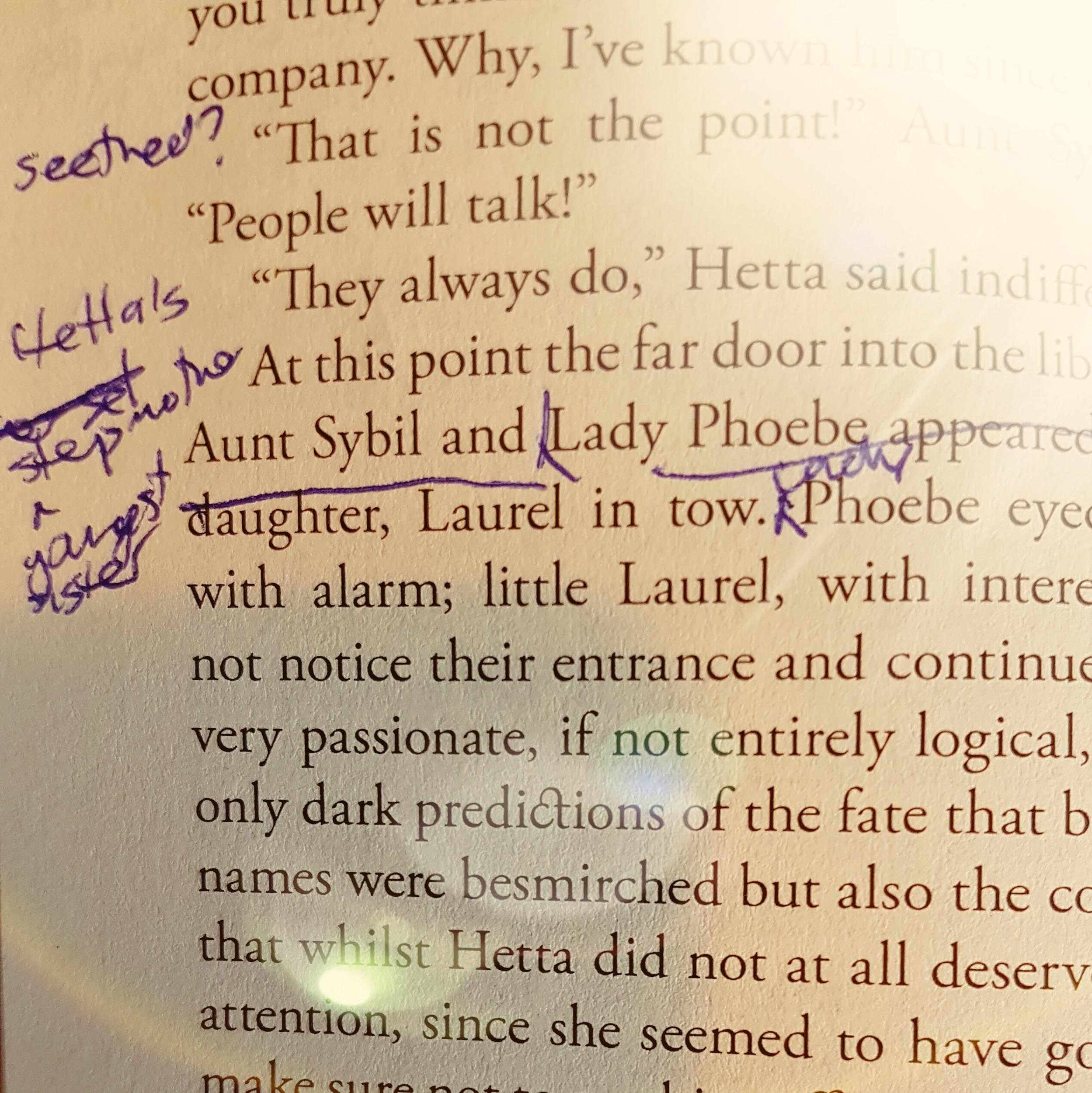
    editing_extract_LoS
    Revision notes on one of my early drafts

    There’s another reason why finishing-a-draft ≠ book-being-immediately-available-to-read, and that’s the writing/publishing process. The writing process (for me) looks like this:

    1. Planning: Yes. Ahem. Moving on.
    2. The First Half of the Book: Shiny idea! I’m a genius! Look at all those words!
    3. The Mid-Point of the Book: Oh dear. Where was I going again?
    4. The End of Draft Zero: Whew, I finally figured out how it ends.
    5. The First Edit: Quick, revise the earlier bits of the book so they match the ending!
    6. First Draft Complete: The manuscript and I spend some time apart. A small number of trusted beta readers* read the book.
    7. Revision: I look at the book with fresh eyes + beta reader feedback and make giant lists of things to fix. I fix the things.
    8. Final Draft: OK, there’s generally a few drafts between Draft One and Final Draft, but let’s pretend in this hypothetical novel I fixed all the things in one round of revisions. Woo! Go me!
    9. And now onto the next step in the publishing process… (more on this in a different update)


  • Optimum Cafe Conditions for Writing

    Optimum Cafe Conditions for Writing

    I spend a surprising amount of time writing in cafes. I like the background white noise, the free heating/air-conditioning (depending on season), and the ability to be alone whilst not alone. The easy access to hot drinks is a nice bonus.

    My working relationship with cafes isn’t a new thing. When I was a university student, I used to study in cafes in the breaks between lectures, spreading my flash-cards and notes out to cover an entire table and making one hot chocolate last for several hours. During my overseas experience in the United Kingdom, I outlined The Lord of Stariel in the Starbucks in Tooting Broadway, London, and wrote the first draft in various cafes around Oxford.

    Consequently, I have a lot of Opinions about what makes for a productive cafe experience. My list of requirements, in order of priority, are:

    1. Large enough that you don’t feel guilty hogging a table for hours (and also so it’s not just you and the barista awkwardly hanging out together)
    2. Good table size & comfortable seat height
    3. No loud music or children
    4. Warm (I get cold easily)
    5. Long opening hours
    6. WiFi
    7. Good coffee
    8. Cheap and diverse cabinet food

    Coming soon on the blog: reviews of Wellington cafes from a writing perspective.

    IMG_20170806_171558_410
    This is from Ombra, Cuba St, which I would never try to write in as it’s more restaurant than cafe, but they do mochas with a SOLID STICK OF CHOCOLATE to swirl around and melt!!!! You’re welcome.
  • Genre: What even is ‘gaslamp fantasy?’

    Genre: What even is ‘gaslamp fantasy?’

    When I finished the first draft of The Lord of Stariel, my friends and family asked, not unnaturally, what it was about.

    “Well,” I said. “It’s a fantasy novel.”

    This was and remains 100% true. It is a fantasy novel. There is magic. Excellent – genre nailed down.

    However, fantasy is a giant genre, so I tried to be a little more specific. The attempt to pin down my subgenre quickly became a depressing exercise in things my novel lacks. It isn’t medieval, grimdark, epic, urban, or steampunk. It’s historicalish but it’s set in its own world. It isn’t about sword fights or going on a quest. There are fae, but it isn’t a fairytale retelling.

    For a while I called it ‘fantasy romance’ because those are two things it definitely contains – even though the romance isn’t exactly the main plotline.

    Eventually I did find a weird niche subgenre label for it in addition to fantasy romance: gaslamp fantasy. This is a subgenre that (a) most people have never heard of and (b) is basically defined entirely by what it’s not. Hoorah!

    Wikipedia defines gaslamp fantasy as:

    ‘a subgenre of both fantasy and historical fiction. Generally speaking, this particular realm of fantasy employs either a Victorian or Edwardian setting. The gaslamp fantasy genre is not to be confused with steampunk…’

    The way I see it, gaslamp fantasy is the magical cousin of steampunk. Steampunk I think draws more from science fiction than fantasy, and has a big focus on machines, cogs, corsets, goggles, Victorian-aesthetic, and, er, steam. Gaslamp is less about the technology and more about fantastical elements in a late nineteenth/early twentieth century setting.

    Today I found out that Amazon recently created a category for gaslamp fantasy books, which heartened me until I glanced through the books listed and found that most of them appeared to be steampunk. Oh well. It’s only a little baby subgenre at the moment – maybe it will grow into something big and popular! After all, a few decades ago most people had never heard of urban fantasy either.

    Bring on the gaslamp fantasy revolution!

  • Camp Nanowrimo

    Camp Nanowrimo

    had intended to finish the raw draft of Book 3 of The Iron Law before 31 March, all nice and neat and ready to start editing the entire trilogy* for Camp Nanowrimo on 1 April. As it turns out, I’m not quite done with Book 3, so Camp has become a combo of finish-book-3 and editing.

    *trilogy…yes…definitely not looking like a fourth one will be in the works. Um.