Category: indie publishing

  • Typesetting Madness

    Typesetting Madness

    This month I have been typesetting up a storm to get paperback copies of The Lord of Stariel ready for release in November.

    Typesetting is the process of formatting a book, so called because back in the day it involved physically setting type. I’ve done this the old-fashioned way exactly once in my life, as part of a training course, and whilst fun it definitely isn’t something you’d want to do for an entire book (it took me about 20 minutes to set my one allocated line of type!).

    font-705667_1280
    Many teeny blocks of lead

    Nowadays, typesetting means electronically laying out a book for print (and laying out the e-book, but that’s a whole ‘nother kettle of fish). I happen to really, really love print typesetting, because I am exactly the kind of person who will agonise over an extra half-millimetre of margin and spend hours weighing up the pros and cons of different fonts.

    If you are not this kind of person, there are some automated solutions. I use one of these (a program called Vellum) for formatting e-books. To my mind, there’s no point agonising over e-book formatting because the appearance of an e-book changes across platforms anyway. You have to let go of the illusion of control.

    You know what you can control to your heart’s content, though? Print books! For typesetting print books, I use Adobe InDesign, which is a control freak’s dream. This is both a great and terrible power. On the bright side, there will be no auto-formatting doing things you didn’t tell it to do (I’m looking at you, Microsoft Word), but on the down side, there will be no auto-formatting to save you. All faults will be entirely your own.

    Microsoft Word formatting
    Truth.

    You can’t truly judge your typesetting until you see a physical proof copy, but printing out pages and cutting them to the correct page size is a useful proxy. Hence my living room has been looking like a bookish murder scene recently, full of disembodied pages:

    1_tLoS_IG_typesetting
    Many iterations of pages with slightly different margins, leading, or font sizes. May appear identical to the untrained or less obsessive eye.

    Once you’ve typeset your book, you then know how many pages it will be – which means you can work out the spine width! And from the spine width comes the BEAUTIFUL FULL COVER SPREAD thanks to my designer:

    The Lord of Stariel full cover spread
    What the paperback version of my book will look like when ironed (DO NOT IRON BOOKS!)

    The last thing to decide on for a print book is the cover finish. As an indie publisher, I have two choices: matte or gloss finish (other cool combo options like metallic foiling and spot gloss etc aren’t available with the print-on-demand (POD) providers I’m using. I’ll do a separate blog about that, but basically POD means someone can order 1 copy of my book from a retailer and behind the scenes the printer will print and ship 1 copy directly to the customer.)

    It’s quite hard to show the difference in a photograph, but gloss finish is, er, glossy, and makes colours seem richer. Matte is, er, not glossy, and it feels smoother in the hand but can ‘flatten’ darker colours.

    1_tLoS_IG_paperback_proofs_in_different_finishes
    Proof copies! BE STILL MY BEATING HEART. Matte finish is on the left; gloss finish on the right. (You can’t tell from this photo at all, but they actually do look extremely different in real life.)

    Next step: Checking the proof copies! (It would be impossible to overstate how overwhelmingly excited I am to be able to hold ACTUAL PHYSICAL COPIES OF MY BOOK.)
  • Less than one month to go…

    Less than one month to go…

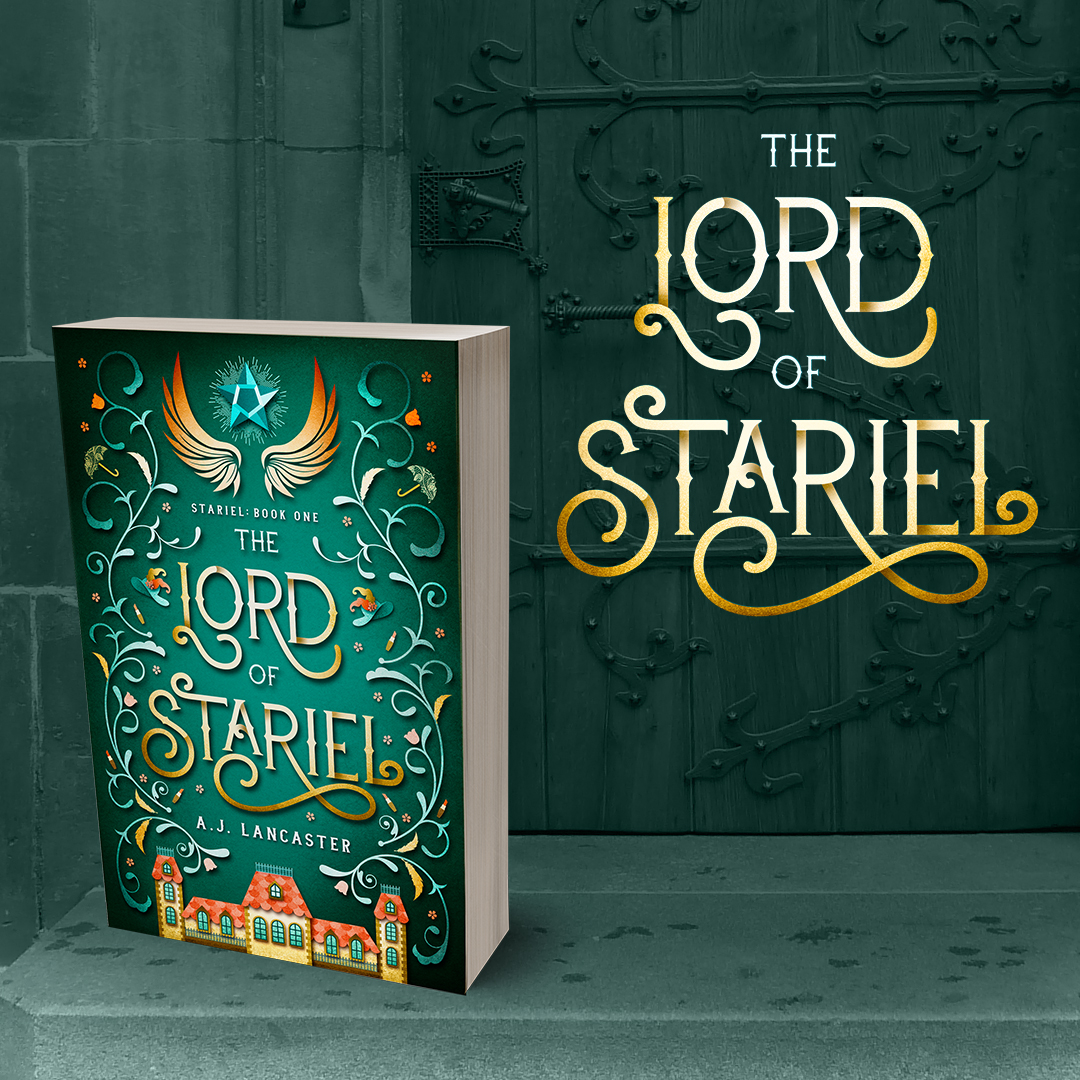
    Soooo… THE LORD OF STARIEL ebook is available to pre-order on Amazon!

    LordOfStariel_FC_R4 medium res
    It will release 1 November and I am COUNTING DAYS GUYS OMG. I am both incredibly excited to show it to the world and nervous for precisely the same reason!

    I think of books as a long, time-delayed conversation between authors and readers. You can keep your writing in the back of the wardrobe and never show it to another living soul. This has the advantage of keeping it safe from criticism, but it’s also a lot like talking to yourself. It also means the book is never truly finished, because there’s nothing to stop you fiddling with your wardrobe-book forever.

    It’s been a long journey, getting this series ready for release, and part of me still can’t quite believe that book one is really truly actually going to be published IN LESS THAN A MONTH.

    Where will the book be available to buy when it releases?

    Ebook

    In the long run, I plan to make my books available on all ebookseller platforms, but in the short run they will only be available on Amazon. This is due to Amazon’s exclusivity requirements for its subscription programme, Kindle Unlimited, which I plan to enrol my books in initially.

    Print

    You’ll be able to order books from your preferred bookseller of choice (I can recommend Book Depository for free international shipping). I’ll let you know when and where they’re available.

    A sneak peek

    I’ve also put the prologue and the first chapter up on the website. You can read it here. I plan to put a few more chapters up before release date, to psych myself up for it!

  • Genre: What even is ‘gaslamp fantasy?’

    Genre: What even is ‘gaslamp fantasy?’

    When I finished the first draft of The Lord of Stariel, my friends and family asked, not unnaturally, what it was about.

    “Well,” I said. “It’s a fantasy novel.”

    This was and remains 100% true. It is a fantasy novel. There is magic. Excellent – genre nailed down.

    However, fantasy is a giant genre, so I tried to be a little more specific. The attempt to pin down my subgenre quickly became a depressing exercise in things my novel lacks. It isn’t medieval, grimdark, epic, urban, or steampunk. It’s historicalish but it’s set in its own world. It isn’t about sword fights or going on a quest. There are fae, but it isn’t a fairytale retelling.

    For a while I called it ‘fantasy romance’ because those are two things it definitely contains – even though the romance isn’t exactly the main plotline.

    Eventually I did find a weird niche subgenre label for it in addition to fantasy romance: gaslamp fantasy. This is a subgenre that (a) most people have never heard of and (b) is basically defined entirely by what it’s not. Hoorah!

    Wikipedia defines gaslamp fantasy as:

    ‘a subgenre of both fantasy and historical fiction. Generally speaking, this particular realm of fantasy employs either a Victorian or Edwardian setting. The gaslamp fantasy genre is not to be confused with steampunk…’

    The way I see it, gaslamp fantasy is the magical cousin of steampunk. Steampunk I think draws more from science fiction than fantasy, and has a big focus on machines, cogs, corsets, goggles, Victorian-aesthetic, and, er, steam. Gaslamp is less about the technology and more about fantastical elements in a late nineteenth/early twentieth century setting.

    Today I found out that Amazon recently created a category for gaslamp fantasy books, which heartened me until I glanced through the books listed and found that most of them appeared to be steampunk. Oh well. It’s only a little baby subgenre at the moment – maybe it will grow into something big and popular! After all, a few decades ago most people had never heard of urban fantasy either.

    Bring on the gaslamp fantasy revolution!

  • Does Size Matter? Choosing the Right Book Format

    Does Size Matter? Choosing the Right Book Format

    This weekend I’m trying to choose the optimum book size. Specifically, fantasy novel size. This isn’t an abstract decision—what I pick will be the size I ask my designer to do for my covers. This is going to be a dorky technical post consisting of me working through my logic on the subject, so forgive me. More scintillating posts to follow, I promise.

    Obviously, e-book covers don’t have a size so much as a ratio of width: height. I don’t think anyone particularly notices or cares whether the ratio is 1:1.6 or 1:1.5 or 1:1.45 so long as it’s, y’know, a rectangly bookish ratio and not a square.

    comparison of cover ratios
    A selection of sort-of-the-same-genre-as-mine ebook covers. Difference in width:height ratio = no one notices or cares!

    So this is a decision where I think print preferences can rule and dictate the corresponding ebook cover size.

    There are two big print-on-demand outfits for indies: Createspace and IngramSpark. The print-on-demand bit is important, because it means I don’t have to pay for warehousing or minimum print run costs; these guys print-and-ship individual copies as they are ordered and charge me on a per-copy basis. IngramSpark offers more formats and wider distribution options, but Createspace is cheaper and easier to set up. Long-term, I think I may use both, but to start with I intend to go through Createspace.

    Because I’m not a heathen, my novels will be printed on cream paper rather than white. Createspace offers expanded distribution, but only for some formats (especially in cream paper). Expanded distribution means they will distribute a book to places other than Amazon.com. Given the constraints (cream paper, expanded distribution, available on both Createspace and IngramSpark), my choices become instantly quite limited:

    • 5” x 8” (127 x 203 mm)
    • 5.25” x 8” (133 x 203 mm)
    • 5.5” x 8.5” (139.7 x 215.9 mm)
    • 6” x 9” (152 x 228.6 mm)

    All of these sizes are…odd, from a New Zealand reader’s perspective. They’re just slightly off the common sizes we get here, which are the same as the UK:

    • A format “mass market paperbacks” (110mm x 178mm)
    • B format (129mm x 198mm)
    • C format “trade paperbacks” (135mm x 216mm)
    img_20170526_142612_685.jpg
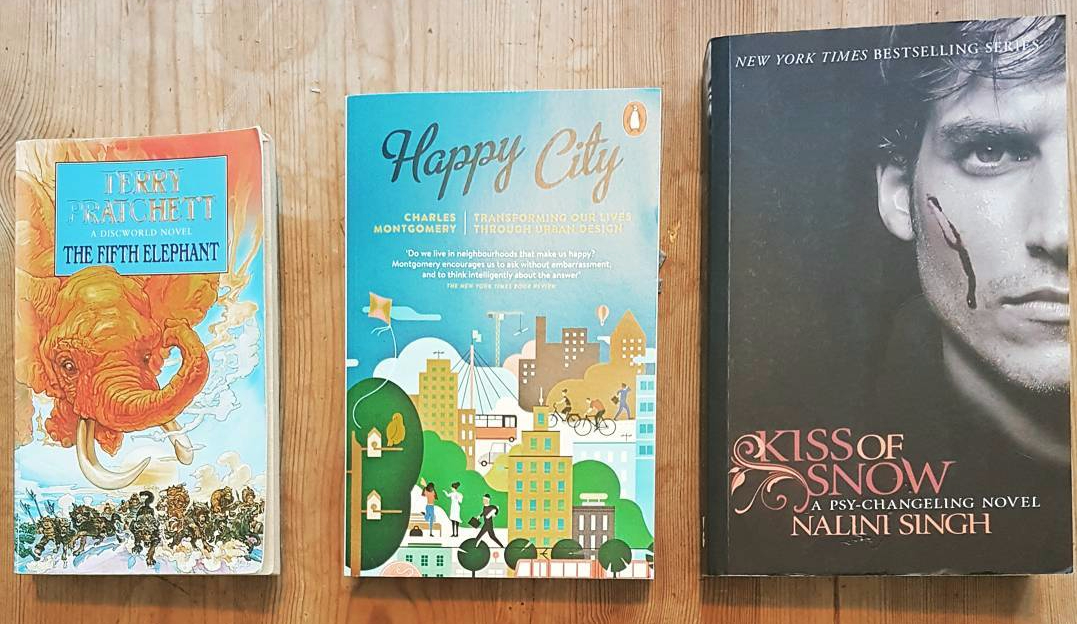
    A, B, and C format books from my shelf.

    Presumably the odd USA sizes are actually common book sizes over there and not just randomly made up to be difficult, but I’m struggling to find any examples in my bookshelf in any of the standard Createspace formats. However, they’re not that different from A, B, and C format books, so I’m using those as a basis.

    Step 1. Immediately remove 6” x 9” as a choice because that just seems unnecessarily enormous. I’m not writing Game of Thrones; I don’t need all the extra page space I can get. Also I don’t even own any books that big.

    I think 5.5” x 8.5” (139.7 x 215.9 mm) is my best option.  It’s a decent size without feeling monstrous, and it’s almost trade paperback size (135mm x 216mm) but about half a centimetre wider. It also has a width:height ratio that’s comfortably in the middle of the examples I put above ( 1:1.55). I think I can live with this.

    OK, decision made. Almost-but-not-quite C format paperbacks, here we come!